
Ay, exam stress and dissertation woes… As my younger son is studying for his GCSE exams, while my oldest one is finishing university, the “home clinic” is in high gear. These days, it’s all about supporting stress relief, deep relaxation, and mental focus. While I’m often available for an extra acupuncture session, I also want to empower my children—and my patients—to take charge of their own well-being. That’s where qigong breathing and acupressure for exam stress come in. These simple techniques have become go-to tools in our household.
Sometimes I am called upon to do acupuncture for a bout of insomnia or a pesky stomach ache which appeared seemingly out of nowhere. On other days, I get an early morning or late night WhastApp message:
Mum, I have two more hours before the deadline, where do I press for greatest focus and not to panic?
Today, I will share with you:
- 5 acupressure techniques to help you or your young person bust stress and stay calm and focused through the exam season,
- discuss the various ways stress affects even the most resilient and fabulous among us,
- what science says about academic stress – with conclusions,
- additional tools and lifestyle tips to support you through the busy time, naturally!
🎥 Prefer to follow along? Watch my 5-minute breathing and acupressure video here → 5 min training: Sitting Wise Owl with Acupressure
👉👉 This is the one my son used during dissertation crunch time!
How Exam Stress Affects the Body
You don’t need to feel stressed to be stressed.
Firstly, let’s get one misconception out of the way: being stressed does not mean you are coping poorly.
In medical language, “stress” just means a challenge to the body. If you take a cold shower, you are causing yourself stress. Some amount of stress is healthy, and in any case, stress is unavoidable. When we are taxing our mind with problem-solving and learning, especially under the pressure of a deadline and the awareness that there is an option to fail, our mind-body knows that it needs to shift into a high gear. Focus, concentrate. Just like in classic fight-and-flight situations, there will be naturally less blood flow to the digestive organs (and reproductive ones, which may affect the way girls experience periods).
These changes will happen even if your conscious mind is super “chill”, and even if you intellectually know you are OK. You might think you’re handling it fine, but your body tells a different story. That’s exactly why acupressure for exam stress, or before your submission deadline, can be such a powerful ally — it offers physical tools to downshift your nervous system and restore balance, even when you’re pushing through.
My younger son is used to the stress of international competitions, yet his body still functions differently during weeks of intense studying.
Additionally, long periods of focused concentration mean we need to learn how to take breaks, and how to maximise the effect of these breaks for our nervous system to get the – you guessed it – break it needs.
What the Science Says
There is a wealth of research on the influence of prolonged or excessive stress on the body. Here, I want to highlight one of my go-to books and two studies which investigated exam stress specifically, yielding conclusions consistent with Chinese Medicine and common sense alike.
- Memory & Stress: A 2023 study showed that students scored significantly lower on visual-recall memory tasks during exam periods compared to regular weeks (75.7% versus 63.1%). So you should think of the time you spend de-stressing smartly as a good investment!
- Gut-Brain Link: In this study, students given probiotics during exams reported reduced anxiety and better gut health (but do not reach immediately for their supplement – the study was funded by a drugs engineering company – just eat a good and varied diet!).
- Sleep & Learning: According to Dr. Matthew Walker, even a single night of poor sleep affects memory consolidation and learning capacity. Be preventative in paying special attention to a good sleep routine, including the baths and acupressure points discussed above.
Symptoms of exam stress can vary widely: no one is immune to exam pressure!
One person may have a melt-down with thoughts of failure – and no, this is not childish, this happens to everyone. I once supported an extremely talented woman, obtaining her second degree, who suddenly felt so overwhelmed she was not going to hand her thesis in.
Other times, it may be insomnia – and then the worry that you are actually not sleeping. Or suddenly needing the toilet with increased urgency. You may be stressed about the exams, about the process of preparation, about your life after university or college, or even, as my son put it, about being stressed! For him, it was a “meta-stress” of sorts which felt most pressing:
I am not worried about the exam. But I am worried that I might feel suddenly anxious, and not sleep as well, and then this is causing me stress!
I have been there myself: not falling asleep quite as smoothly as I would like to and then thinking, oh no, if another hour passes like this, I will be so knackered tomorrow, how badly will my concentration be affected? How will I cope?
Because Chinese Medicine works both on the body and the mind, acupressure for exam stress is the perfect tool to address those symptoms: whether physical, emotional, or psycho-somatic.
Acupressure for exam stress to promote Focus, Sleep & Calm
👉 If you would like a handy pdf guide with detailed acupressure point prescriptions for various conditions (e.g. insomnia vs anxiety) you can download it here. 🍀
Remember that Acupressure is cumulative. While you will likely feel some immediate relief, it is when you use acupressure daily and regularly when it really comes into its full power, as demonstrated by a meta-analysis I talk about here.
1. YinTang – The Palace of Calm
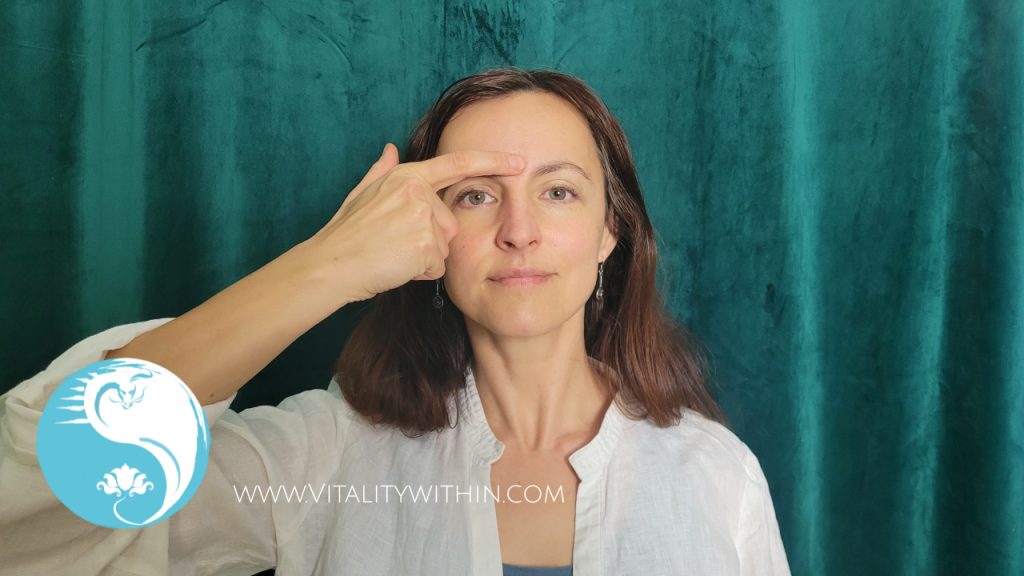
When to use it: This acupressure point is for you if you crave a sense of gentle stress relief, calm and peace.
Location: Find YinTang on the forehead, right between the eyebrows.
How to stimulate: Press gently or massage in a small, circular motion for 2 minutes. Imagine your forehead relaxing and warmth radiating from this point.
Effect: calms the mind, helps concentration, relieves insomnia – especially the type when you cannot fall asleep.
2. FengChi (GB20) – Clear the Mind & Eyes
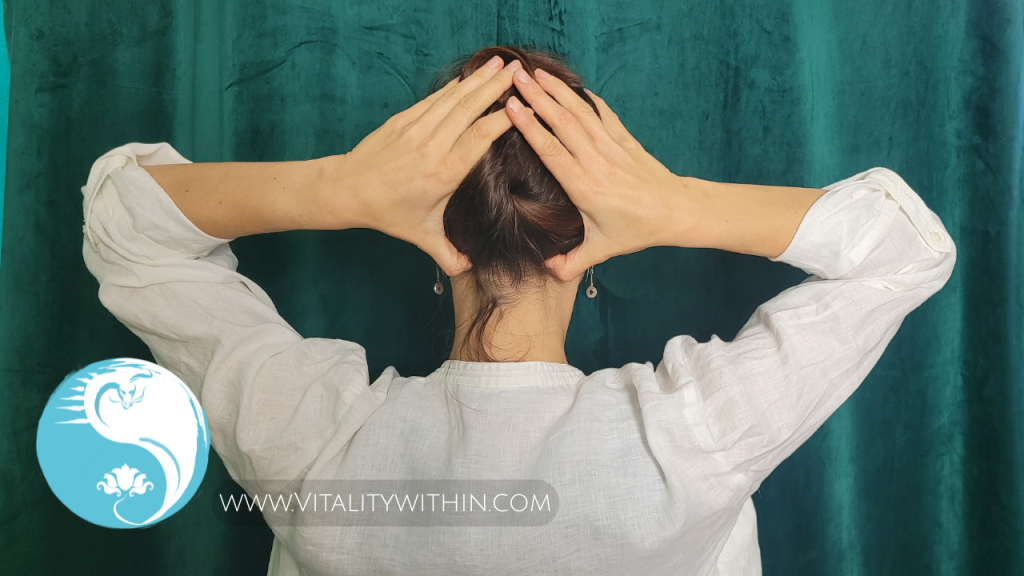
When to use it: This point is for you if your head feels muggy, stuffy, and you struggle to concentrate, or are prone to headaches.
Location: Find GB 20 at the back of the head, just under the bone, about 2 finger breadths from the spine.
How to stimulate: Press firmly with your thumbs, in the direction of the opposite eye.
Imagine your head emptying, as if you opened the windows in a big, stuffy room.
Effect: Acupressure at GB 20 calms the mind, helps concentration, relieves headaches, benefits tired eyes.
3. TaiChong (LR 3) – ease tension, help insomnia
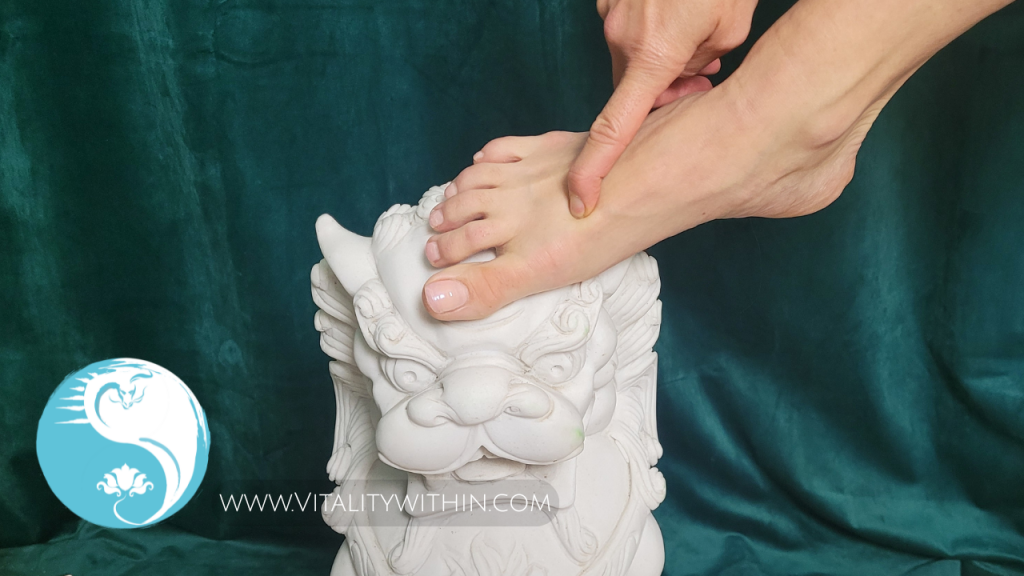
When to use it: TaiChong – LR 3 will help you relax physically as well as mentally, especially if you are holding a lot inside and feel tense. It helps with sleep problems and mood swings.
Location: You will find LR 3 acupressure point on your foot, at the end of the “valley” by the big toe.
How to stimulate: Press as firmly as you can without too much discomfort, hold for 2 minutes per leg, twice a day. If the whole area is tender or appears a little swollen, you can also massage it from the direction of your toe towards the mid-foot.
Effect: calms the mind, relieves insomnia – especially the type when you wake up throughout the night, helps with emotions of frustration.
4. SanYinJiao (SP6) – supporting the gut, easing insomnia
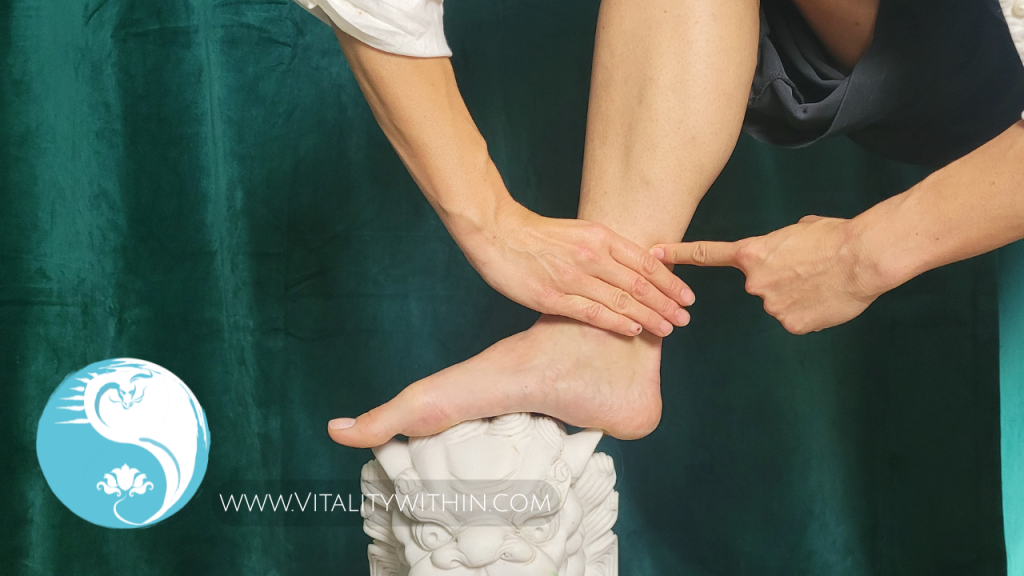
When to use it: SP 6 acupressure point will help with issues of insomnia as well as digestive problems, especially if they are worsened due to stress!
Location: Find SanYinJiao / SP 6 one hand breadth (4 fingers) up from your inner ankle, just by behind the shin bone.
How to stimulate: Press quite firmly once you find a tender spot. You might need to explore a little up and down your leg (1-2cm) in order to find the best location for you. Press where it’s tender, hold for 2 minutes, periodically easing the pressure to allow circulation to go back.
Effect: Acupressure here calms scattered thoughts, relieves insomnia, boosts digestion energy.
5. Shan Zhong (Ren 17) – calm anxiety, recharge fully
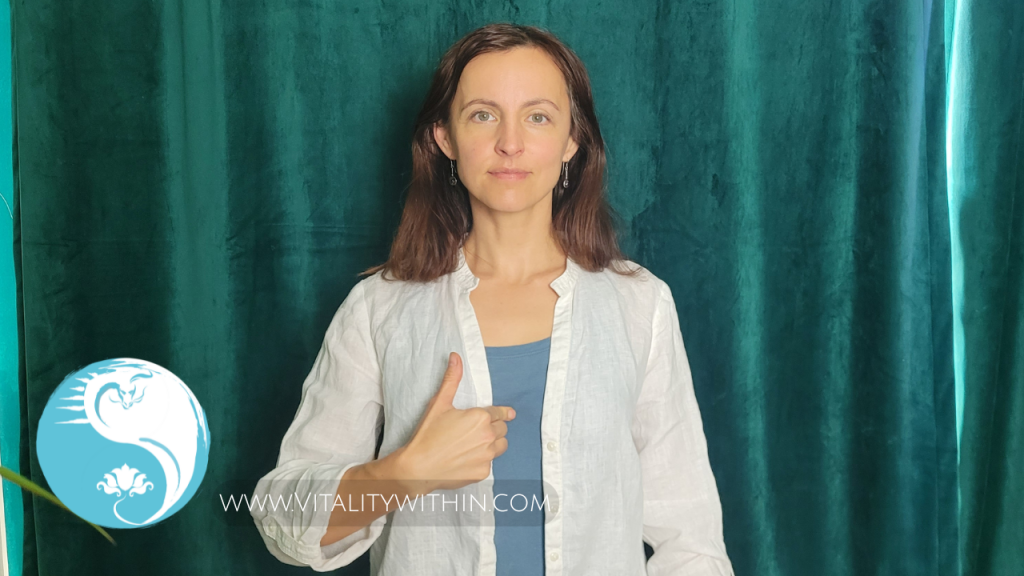
When to use it: Ren 17 acupressure point is especially helpful if you feel anxiety rise to your chest, as if you cannot take a relaxed breath.
Location: Right in the middle of the chest, on your sternum, in line with the nipples.
How to stimulate: Press decisively, or massage gently, with the tip of your finger/ thumb staying in place, while the hand making little circles (See video link below). Breathe slowly.
Effect: calms anxiety, has a soothing and nourishing effect, relaxes the chest, so you can breathe more freely.
➱ Watch a 5-minute guided practice using Shan Zhong and QiGong breathwork on YouTube: CLICK HERE 🙂
Lifestyle tools for times of stress
All in all, the mental effort during the exam season depletes the body and may weaken digestion. It is extremely important to keep yourself balanced, so that you do not crash, and your mental health does not suffer (too much).
- Move every day: Go for walks, hit the gym, or spare 10 minutes for a whole-body movement and desk-hunch busting QiGong session in this follow along video.
- Ground yourself: walk barefoot and sit on the grass – touching the ground allows us to… ground! There is a good amount of evidence that being in contact with the earth’s electromagnetic field allows us to recharge faster and deeper.
- Eat kindly to yourself: your daily diet should include plenty of fruits and vegetables, nuts, seeds and healthy proteins. From the Chinese Medical perspective, it is important to make sure your food is easy to digest. It is the same meridian system which governs the digestive fire and intellectual thought – if a lot of its energy goes to the latter, there is less of it left for digestion! So think: smoothies, soups, freshly squeezed juices. Opt for lighter fare at dinnertime, such as chicken breast, instead of steak. If you feel like snacking, carry with you a little container filled with nuts, seeds and dried fruit (raisins, unsulphured apricots, goji berries etc), to give your body a boost as well as some quick energy.
- Bathe in Epsom salts – these are rich in magnesium, which absorbs through the skin. You want a proper amount of the salts: about 2 cups, and soak for at least 20 minutes. If you do not have a bathtub, you can soak your feet in a basin. The magnesium and warm water will help to soothe tension and ease anxiety, as well as help you sleep, which bring us to the next point:
- Prioritise sleep. But don’t panic if you have some insomnia – it happens! Plan a nap if needed.
- Consider homeopathy and aromatherapy. This article here lists 9 useful remedies that Karen, a knowledgeable homeopathic practitioner from Devon, uses to support her family and clients. She also offers some great lifestyle advice.
Best of luck with your exams, dissertations, or supporting a loved one through them. Acupressure for exam stress, or any form of high-pressure academic endeavour, combined with good food, rest, and mindful breaks, can make a real difference. For extra support:
- Watch my de-stress video to re-set in the middle of writing, or cramming (using the ShanZhong point): go to YouTube
- Download your free guide to acupressure for mental health here
- Try a short QiGong routine during your next 10 mins study break, to counteract desk posture calming your mind at the same time!



What a valuable bundle of information and guidance!! Thank you so much,we will definitely try those techniques.
You are most welcome! Fingers crossed for you and your young person in this stressful time. If you try something and have further questions, just post another comment here, I will be happy to help, clarify and if needed, inspire further! Keep going! 🤜
Mi amor jestes moim skarbem
Thank you, dear M, for supporting my work! You made me smile 😄 Please pass on if you have an overwhelmed student.
Dear Iga,
This post just came at the right time for me today! I was about to give a lecture I did not feel very confident about and your advice has been so supportive! Thank you!
When life is hard and pressure at work hits hard, qi gong, acupressure and tapping are a huge way to cope and do yourself some good.
Thank you for your guidance 🙏🏽
Silvia
Thank you so much for taking the time to comment, Silvia! It is so interesting and wonderful that you can use these same techniques while being on the other side of the fence – not only as a student, but as a teacher or lecturer. I hope you found the confidence you deserve to have, and that your lecture went well!