
As a woman – and a mother of three – I can tell from experience: being a woman is tough. Yes, it is also very beautiful and a blessing, but tell that to any one of us when we are curled on the bed with cramps, or cannot sleep at night due to hot flushes, or riding the waves of mood fluctuations like the clumsiest of surfers.
Yet, I also inherently believe in the wisdom of the body. Each big life event, each transition, is an opportunity to check in with yourself and emerge stronger, healthier and more aligned with our core.
Take menopause. It is a natural, precious stage of life: from a child-bearing woman, we transition into a Sage Woman, who can guide the youngsters and the community. Why does it have to be so tough, then? Many of you may ask. Well, it does not have to be, but when it is, it is so for a reason. In this article, I will tell you how to understand what your body is telling you, how to honour it and how to heal and reset yourself for the next stage of life.
Key take-aways:
- reframing menopause allows us to look at it as an opportunity for “spring cleaning”
- there is a reason behind every symptom – such as imbalances which accumulated over time
- Chinese Medicine sees the body as trying to return to balance. Learn holistic reasons behind hot flushes, anxiety and brain fog.
- the reason Acupuncture and Qigong are useful in easing menopause symptoms is that they address body and mind at once
- Practical steps for what you can do, starting today, whether you have symptoms or not!
Natural Menopause Relief: Overview of A Holistic Perspective
In my work supporting women through natural menopause relief in Cambridge and Royston, I have found acupuncture to be invaluable. Research supports its effectiveness in easing hot flushes, insomnia, and anxiety – I provide an overview below. In addition, Chinese Medicine offers a richness of other tools, including QiGong and breathwork to balance the Autonomic Nervous System, which will in turn help to balance hormones, and make you feel calmer, more energised and focused.
Diet strategies based on the principles of Chinese Food Energetics are also a great tool, especially when tailored individually to each woman’s menopause journey, health and lifestyle.
Here, I will explain the principles that makes these approaches so effective, and give you a few takeaways to implement in your life right now, starting with my very practical Guide to Food for Hot Flushes you can get in your inbox today:
→ Download my Food for Hot Flushes Guide here
Menopause as a Time to Check in
If we honour the wisdom of the body, we can start seeing menopause as a chance to take stock — physically, emotionally, and energetically.
Why not all women have menopause symptoms
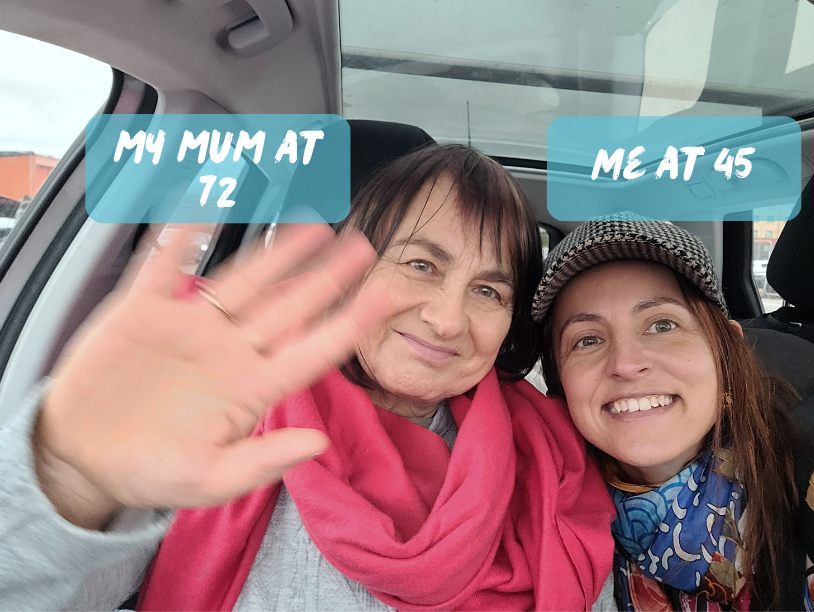
My Mum, pictured above, had no menopause symptoms. I was quite shocked when I learnt that!
While this is unusual, she is by no means alone: according to research, a percentage of women glide through menopause symptom-free – somewhere between 5 % and 20% according to the British Menopause Society.
So, if every woman goes through the same biological changes — a drop in oestrogen and cessation of menses — how is that possible? Interestingly, Western science does not quite have the answer.
While we can trace under a microscope the well-known and universal changes that menopause brings, it is not clear why some women suffer so badly, while others do not. However, what research has established, is that there are several factors which influence this transition, for instance: exercise of the right type, diet, mindset and even social status being some of them. Note, simple aerobic exercise might not be enough, as this large, robust study found limited benefit. https://acupuncture.org.uk/news/bacc-launches-collaborate-with-confidence/
As you can see, those factors are largely psychosomatic, linked to both the mental and physical aspect of our being. That is because in reality, those aspects are part of one and the same – and Chinese Medicine, hailed by the British Acupuncture Council as the “original Mind-Body Medicine“, has treated them as inseparable since its advent. This matches how women experience menopause, and is part of why a holistic approach is so effective, as you will see below.
So while we know that a drop of oestrogen may cause negative “side effects”, let’s not excuse the ailments we suffer by saying, oh, it’s just women’s hormones. If that were the case, then every woman would experience the same symptoms.
From a holistic point of view, menopause is a time when our bodies, going through major change, bring into the spotlight everything that has been neglected, swept under the rug of the everyday priorities and daily rush.
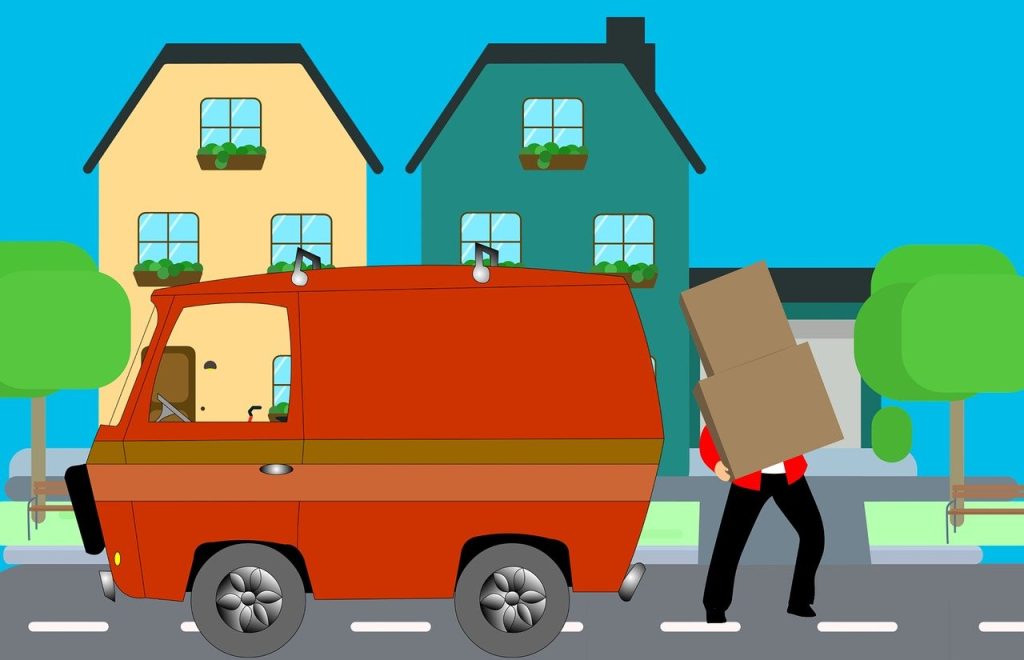
Menopause Reframed: think of it as a move!
Think back to the time when you had to move house – or even better, imagine having to do so right now.
If you are like most of us, there will be some drawer that has been gathering clutter for years. A box in the attic you don’t quite remember the contents of. A broken item or two (or ten!) that have been set aside for fixing… one day.
As long as our lives follow a predictable daily routine, and our focus is taken up by the pressing matters of work, children etc, that cluttered drawer or box in the attic do not really bother us much. But when the Times of Change come: say, you are moving, then suddenly all that is brought into the spotlight. It has to be dealt with! And the more clutter you have in your life, the more difficult your move will be. This is not to say you should blame yourself, ever, for your menopause symptoms. It may well be that you have been giving it your all to your work or your family.
Menopause is just like moving house: from the Fertile Lady body to the Sage Lady body. They are different, but both can be beautiful and healthy. But in the process, all your unrepaired items and clutter will unfortunately surface. Or – fortunately – as I will show you below.
Understanding the Messages Behind your Symptoms
What’s behind menopause fatigue?
I remember talking to a woman at a Menopause Cafe, a great initiative rolled out across the UK to raise awareness of menopause, offer peer support and a safe space for women to talk about their experiences. This particular lady confided in me that she felt tired all the time and could not help but sleep in in the mornings, while crashing at night from exhaustion.
So, I asked her how much she slept on an average night. The answer surprised me: around 9 hours. While this may be more slumber than most adults get, it is not, biologically speaking, excessive. According to Dr Matthew Walker, the author of “Why we Sleep”, a grown up person needs around 8 and a 1/2 hours of sleep per night. I then queried my companion, how many hours of sleep did she get before perimenopause started? It turned out that for many years of her working life, she averaged only 5 to 6 hours of rest per night: way below the recommended norm.
Remember: fatigue is not a “failure”! It may be your body demanding repayment of a long-standing sleep debt.
Therefore, it is not a symptom to be addressed; instead, it is a symptom to be honoured.
Every Symptom happens for a reason
Once we reframe the symptoms of menopause, we get a powerful key to understanding the path to healing.
How many such imbalances do we carry? Be honest with yourself for a moment.
Do you move daily? Sweat at least three times a week? Eat to nourish rather than deplete yourself? Release stress each day?
By the way, releasing stress is not just “pleasant”, it is crucial to health. You can learn just how important it is in this blog article here, or watch a 10 min YouTube video me talking about the difficulty to unwind and what to do about it.
We have already established that that every symptom happens for a reason.
So, let’s look at what each symptom means through the prism of Chinese Medicine.
Chinese Medicine View of Menopause Symptoms
There is no translation of “menopause” into Chinese Medicine – the Classics talk about cycles of life, which for women happen in 7 year intervals, so that at 49 “the Dew of Heaven dries up”. This is lends itself beautifully to treating every woman as an individual, and assessing her symptoms for the deeper “root”, or cause, behind them. Here are the most common ones:
Hot Flushes: Releasing Excess Heat
Hot flushes can be seen as a sign that too much heat has accumulated in the body, and your system is desperately trying to get rid of it. The source of this heat can be internal or external. External is easier to explain: this means it has been introduced to the body, such as for instance, when we eat too many foods which are energetically heating (I provide a list here). Internal means that it arises within the body for a reason: for instance, due to repressed emotions or not enough deep, nourishing rest (which causes a deficiency of the Yin type of energy). This view is consistent with the fact that in cultures where less energetically heating food is consumed, such as Japan, hot flushes are a much rarer symptom. [LINK]
The goal of acupuncture then is to “drain” the extra heat from the body, resulting in traceable hormonal rebalance, while a dietary adjustment will prevent heat from accumulating more.
Anxiety: Calming the Scattered Qi
Anxiety often reflects “scattered Qi of the heart.” In Western terms, it’s linked to an overactive sympathetic nervous system — too much “fight or flight”, whether working hard, or coping with a variety of pressures. However, there are also other reasons for the Qi to scatter: for instance, blood loss (a shout out to my Chinese Medicine students!). This can accumulate overtime, such as with heavy periods.
If you suffer from anxiety in menopause, it means your mind-body is asking for a deeper grounding, nourishing and balance – both in the physical and emotional sense.
Brain Fog: Clearing Damp and Improving Flow
If you suffer from anxiety in menopause, it means your mind-body is asking for a deeper grounding, nourishing and balance – both in the physical and
Brain fog is seen as “damp” — heaviness that may stem from sluggish digestion, poor circulation, or an overburdened metabolism. In Chinese Medicine, if the energy of the digestive system (Spleen/ Pancreas) is weak, it will struggle to fully process certain foods. If a lot of our diet is “damp forming”, this can make our whole body – thoughts included – feel stagnant and foggy. Mind you, this weakness can have several reasons behind it, best to see a practitioner rather than me theorising about it here! All this ties very well with the current Western understanding of the crucial link between the gut health and the brain.
When we look at the symptoms of menopause from that perspective, it becomes clear that addressing them is about much more than bringing immediate relief.
It is an opportunity to reinvent your lifestyle, and regenerate your health from inside out.
Life after menopause can be rich and beautiful!
Why QiGong and Acupuncture Work for Menopause Relief: the research
It was a Chinese Medicine doctor, the great Sun Si Miao, who wrote the world’s first medical text specific to women’s health. As such, acupuncture and related therapies has a long history of treating the female hormones: it has been tried and tested and tweaked for centuries! In the light of modern science, it has been recognised that it has a powerful effect on balancing the hypothalamic-pituitary-adrenal (HPA) axis, being able to bring about a “neuroendocrine equilibrium”: that is, help both the nervous system and the hormones to work well.
The mechanisms of action of QiGong have not been quite as deeply studied, but we can be certain that it brings about a balance of the Autonomic Nervous System, which is inseparably linked to our endocrine, or hormonal, landscape. A study specific to menopausal women done in Spain has found QiGong improved a wide range of symptoms! You can read more about this and other QiGong research on my QiGong Community Page here.
And curious what people who tried QiGong with me say about it? See the short videos where they talk about the effects themselves.
Take-aways to start implementing today – even before menopause!
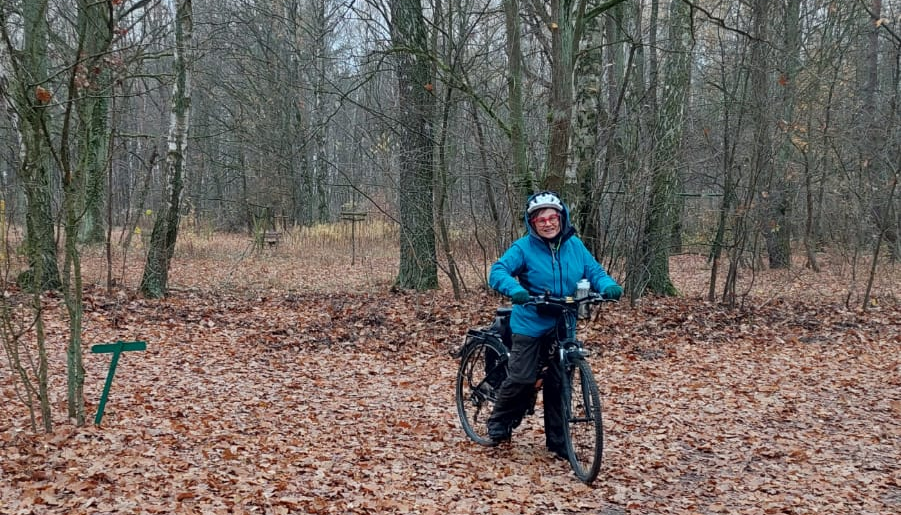
Just like it is always a good time to declutter your house, you always start implementing these menopause-friendly tips! Don’t think you are too young, or that you are too old because menopause is behind you, or almost behind you, already.
- eat right: not just healthy, but healthy-for-you-right now.
- Move, even when you are tired. This can help decrease your fatigue. Try this 10 minute routine which is both relaxing and energy-boosting.
- Implement strategies to keep your mood up! Such as:-> journalling
-> spending time with friends
-> spending time in nature: hiking, gardening
-> hypnotherapy
-> regular gratitude practice or prayer - Keep systemic inflammation low: Listen to Dr Mardi Crane-Godreau explain why this is important and how QiGong can help!
- Do your best to regulate your sleep. Listen to this guided meditation if you struggle to switch off.
- address the symptoms you have, don’t “grin and bear” them! Each symptom means there is an imbalance. Even when your peri-menopause passes, the imbalance will stay if not addressed. And addressing it now will not only make you happier and healthier immediately, it will also form a foundation for vitality for the years to come.If you want some personalised guidance with regards to QiGong practice in my global community, or are interested in visiting my Acupuncture clinic in Cambridge or Royston, you can BOOK A FREE CHAT with me first.I hope this was inspiring, fellow ladies 🙂
Please do not hesitate to reach out if you have any questions or comments – regardless on where you are in your journey.